Here are all the "Great Minds" posts made in March, 2022.


Showing posts with label TJBL Birthdays. Show all posts
Showing posts with label TJBL Birthdays. Show all posts
Tuesday, March 1, 2022
Tuesday, February 1, 2022
Saturday, January 1, 2022
Great Minds Born in January
Here are all the "Great Minds" Posts made in January, 2022.
January 1

- Ulrich Zwingli (1484-1531) Swiss Reform Theologian ranked after Luther and Calvin as the "Third Man of the Reformation." His collected works are expected to fill 21 volumes; one work popular in English is The Christian Education of Youth.
- Arthur Hugh Clough (1819-1861) English poet and friend to many others, including Matthew Arnold. Surprisingly, he also worked as an unpaid secretarial assistant to his wife's cousin, the English social reformer, statistician, and founder of modern nursing Florence Nightingale. He wrote the short poems "Say Not the Struggle Naught Availeth" (which struggle is unspecified); "Through a Glass Darkly," on faith and doubt; and "The Latest Decalogue," a satirical take on the Ten Commandments.
- James George Frazer (1854-1941) Scottish anthropologist; mythology and comparative religion, especially the incredibly important The Golden Bough.
- E. M. Forster (1879-1970) English novelist, short story writer, and essayist; his novels--A Passage to India, A Room with a View, and Howards End--were made into crashingly slow films (one friend called the last one "Howards Endless"). His many short stories include "The Machine Stops"; "The Other Side of the Hedge"; "The Life to Come"; "The Classical Annex"; and "The Other Boat." He also wrote literary criticism, biography, travel pieces, and more.
- J. D. Salinger (1919-2010) American short story writer and novelist. The Catcher in the Rye is tackled in many a classroom; its success drove Salinger to become a recluse. All of his books are worth reading (I have!); after Catcher, start with Nine Stories; then Franny and Zooey; then Raise High the Roof Beam, Carpenters and Seymour: An Introduction.
January 2

- Isaac Asimov (1920-1992) prolific American sci-fi writer and professor of biochemistry; with Robert A. Heinlein and Arthur C. Clarke, considered one of the "Big Three" science fiction writers. The Foundation Series (seven books) is required reading; then, maybe, the stories in I, Robot; the Galactic Empire series; the Robot series; "Nightfall"; essay collections.
- Therese of Lisieux (1873-1897) nearly-modern French nun and mystic who wrote the poetic masterpiece "To Live by Love"; also L'Histoire d'une Ame (The Story of a Soul); Last Conversations; poetry, prayers, and religious plays.
January 3

- Cicero (106-43 BCE) Roman orator, author, and letter-writer who wrote these orations: In Verrem (Against Verres); In Catilinam (Catiline Orations) I-IV; Philippicae (Philippics); and philosophical works: De Oratore (On the Orator); De Re Publica (On the Commonwealth); De Legibus (On the Laws); De Finibus (On the Ends of Good and Evil); De Natura Deorum (On the Nature of the Gods); De Officiis (On Obligations)
- J. R. R. Tolkien (1892-1973) English author of The Lord of the Rings and The Hobbit, who was also a scholar and translator of medieval literature
- Sergio Leone (1929-1989) Italian filmmaker of "Spaghetti Westerns"; the Dollars trilogy (A Fistful of Dollars; For a Few Dollars More; The Good, the Bad and the Ugly); Once Upon a Time in the West; Once Upon a Time in America
January 4

- Jacob Grimm (1785-1863) German folklorist known for Kinder-und Hausmärchen (Children's and Household Tales, with brother Wilhelm), better known as Grimm's Fairy Tales, which the brothers first published to finance their research; Deutsche Mythologie (Teutonic Mythology)
- Gao Xingjian (1940 - ) Chinese novelist, playwright, and critic; Buying a Fishing Rod for My Grandfather (short story collection); Soul Mountain; One Man's Bible; won the Nobel Prize in Literature (2000)
January 5

- Xu Xiake (1587-1641) Chinese Ming-dynasty travel writer and geographer known for his postumously-compiled Xu Xiake Youji (Xu Xiake's Travels), covering all of the 16 provinces of the China of his time.
- Paramahansa Yogananda (1893-1952) Indian yogi who published the first edition of his Autobiography of a Yogi in 1946; it has been greatly expanded since then.
- Umberto Eco (1932-2016) Italian novelist, critic, and philosopher whose complex novels reflected his work in semiotics; The Name of the Rose; Foucault's Pendulum; The Island of the Day Before; The Prague Cemetery. But he also wrote children's books, and far more non-fiction than his "mere" seven novels.
January 6

- Clarence King (1842-1901) American geologist and author who wrote Mountaineering in the Sierra Nevada when he was U.S. Geologist of the 1867 Fortieth Parallel Survey from northeastern California to eastern Wyoming. He was subsequently the first director of the United States Geological Survey (USGS). In his last 13 years, King also led a double life as a (blue-eyed, fair-skinned) African American in a common-law marriage with the formerly-enslaved Ada Copeland.
- Carl Sandburg (1878-1967) American poet, writer, and editor; poetry Chicago Poems; The People, Yes; history Abraham Lincoln: The Prairie Years and The War Years; Rootabaga Stories for children; he received two Pulitzer Prizes in Poetry (1919, 1951); one for History (1940)
- Kahlil Gibran (1883-1931) Lebanese-American artist, poet, and writer; The Prophet; Jesus, The Son of Man; Broken Wings
- E. L. Doctorow (1931-2015) American novelist, several of whose books became films; The Book of Daniel; Ragtime; World's Fair; Billy Bathgate; The March; Homer & Langley.
January 7

- Albert Bierstadt (1830-1902) Prussia-born American painter of large landscapes (some around 10 feet wide) like The Rocky Mountains; Among the Sierra Nevada, California; and Mount Corcoran
- Zora Neale Hurston (1891-1960) American novelist, short story writer, and anthropologist whose work slid into obscurity for decades; interest was revived partly through the efforts of author Alice Walker. Novel Their Eyes Were Watching God; folklore collection Mules and Men; play (co-written with Langston Hughes) Mule Bone: A Comedy of Negro Life.
January 8

- Su Dongpo (1037-1101), also called Su Shi, major Chinese poet; around 2,700 poems, including Chibifu (The Red Cliffs); Nian Nu Jiao: Chibi Huai Gu (Remembering Chibi); and Shui diao ge tou (Remembering Su Zhe on the Mid-Autumn Festival). One of "Eight Great Prose Masters of the Tang and Song."
- Wilkie Collins (1824-1889) English novelist, playwright, and short story writer befriend and mentored by none less than Charles Dickens. His writing quality declined in the 1870s and 1880s when he became addicted to opium he had started taking for health reasons. His reputation rests on works of the 1860s such as The Woman in White; No Name; Armadale; and The Moonstone.
January 9
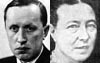
- Karel Capek (1890-1938) Czech playwright and novelist; novel War with the Newts; play R.U.R. (Rossum's Universal Robots). He is one of the rare individuals credited with coining a word that everybody knows: robot, from a Slavic root with meanings associated with labor.
- Simone de Beauvoir (1908-1986) French novelist, philosopher, and pioneering feminist (though she would have rejected the label); She Came to Stay; The Second Sex; Memoirs of a Dutiful Daughter
January 10
- Robinson Jeffers (1887-1962) California-based American poet (one of my personal favorites) and self-proclaimed "inhumanist," whose thoughts and poetry reflected the idea that we humans put ourselves too much at the center of things. Much of his work centers on narrative, even epic, poems, but the very short vignettes are priceless, too. Roan Stallion, Tamar, and Give Your Heart to the Hawks are good examples of the former; "Natural Music," "Hurt Hawks," "The Purse-Seine," "Shine, Perishing Republic" of the latter.
- Erna Fergusson (1888-1964) New Mexico-based writer, historian, and storyteller, and part of the Southwestern Renaissance (like her novelist brother Harvey), who documented the culture and history of New Mexico for more than forty years. her first book was perhaps her most successful, 1931's Dancing Gods about Indian ceremonials.
- Philip Levine (1928-2015) American poet of working-class Detroit (poetry "for people for whom there is no poetry") who taught English for more than 30 years at California State University, Fresno. What Work Is; Pulitzer Prize for Poetry for The Simple Truth (1994); Poet Laureate of the USA (2011-2012).
January 11

- Alexander Hamilton (1755 or 1757-1804) American statesman, Founding Father, first Secretary of the U.S. treasury, and co-author of The Federalist Papers who achieved new-found celebrity as the fictionalized subject of the 2015 sung-and-rapped-through Broadway musical by Lin-Manuel Miranda ("a record-breaking 16 Tony nominations and 11 awards!")
- William James (1842-1910) American philosopher and psychologist known for The Principles of Psychology and The Varieties of Religious Experience, both of which can be read in small sections for great benefit. James, brother of author Henry and godson of Ralph Waldo Emerson, taught the first psychology course offered in the United States, at Harvard.
- Aldo Leopold (1887-1948) American naturalist. His A Sand County Almanac is a delight to read; a professor at the University of Wisconsin, he influenced the development of modern environmental ethics and in the movement for wilderness conservation.
- Manfred Bennington Lee (1905-1971) American author of crime stories; half of a pair of cousins who together created the fictional character and equally-fictional writer "Ellery Queen." (His cousin's name was Daniel Nathan, pen named Frederic Dannay.)
January 12
- Charles Perrault (1628-1703) French writer of fairy tales 100 years before the Brothers Grimm, in the process inventing the fictional story teller Mother Goose; his tales include "The Sleeping Beauty," "Little Red Riding Hood," "Cinderella," and "Puss in Boots."
- Edmund Burke (1729-1797) Anglo-Irish statesman, economist, and philosopher who, while opposing independence, generally supported the right of the American colonies to fair treatment, while also opposing the French Revolution, which he felt was destroying the fabric of a good society. Though later praised by both conservatives and liberals, in the 20th century, he became widely regarded as the philosophical founder of conservatism. He wrote On the Sublime and Beautiful and Reflections on the Revolution in France.
- Jack London (1876-1916) American novelist, short story writer, journalist, and activist, and one of the first American authors to become an international celebrity and earn a large fortune from writing. His rough-and-ready novels include The Call of the Wild, White Fang, and The Sea Wolf; and stories "To Build a Fire," "An Odyssey of the North," "Love of Life," "The Pearls of Parlay," and "The Heathen"; the non-fiction work The People of the Abyss was an exposé of the conditions of the working class in the east end of London.
- Haruki Murakami (1949 - ) Japanese novelist, short-story writer, and essayist, a bestseller in Japan as well as internationally (his work has been translated into 50 languages). His many works include A Wild Sheep Chase; Norwegian Wood; The Wind-Up Bird Chronicle; Kafka on the Shore; and 1Q84.
January 13
- G. I. Gurdjieff (1866-1949) Armenian-Russian philosopher and mystic, who wrote that most of us live our lives in a state of "waking sleep," from which it is possible to awaken--something the Buddha said 2500 years earlier. The purportedly autobiographical (but more likely fictional) Meetings with Remarkable Men contains "profiles" of his inspirations.
January 14
- Albert Schweitzer (1875-1965) French-German theologian and physician known for missionary work; winner of the Nobel Peace Prize for his philosophy of "Reverence for Life." His The Quest of the Historical Jesus (1906) traces how Jesus' image has changed with the times, and that, while his stance may be misunderstood today, Jesus was a real person living in the religious and political context of his time, with goals that differ with those of the traditional Christian view; The Mysticism of Paul the Apostle (1931) postulates a highly-developed form of mysticism ("being in Christ") not to be confused with that of "primitive" mystics.
- Hugh Lofting (1886-1947) British author who wrote numerous works for children and adults, the most famous of which was The Story of Doctor Dolittle and its 14 sequels, featuring the physician (and later, naturalist) who shuns human patients in favor of animals, with whom he can speak in their own languages.
- John Dos Passos (1896-1970) American novelist who wrote Manhattan Transfer, overlapping individual stories about urban life in then-modern New York City; and the "U.S.A. trilogy": The 42nd Parallel; 1919; and The Big Money, a patchwork of genres (fictional narratives, documentary sources, short biographies of public figures, and fragments of autobiographical stream of consciousness writing) creating an impression of America during the first three decades of the 20th century.
- Yukio Mishima (1925-1970) stunningly evocative Japanese novelist, playwright, poet, short story writer, and essayist. A Shintoist and active right-wing nationalist, he opposed Japan's increasing western-style materialism and postwar turn to democracy and globalism. To prove his point, he and four followers entered a Tokyo military base and took its commandant hostage, attempting to overthrow Japan's 1947 Constitution. After a speech and a cry of "Long live the Emperor!", he committed seppuku ("hara-kiri"), the favored mode of death of the samurai. Works include Confessions of a Mask; The Temple of the Golden Pavilion; The Sailor Who Fell from Grace with the Sea; The Sea of Fertility tetralogy (Spring Snow; Runaway Horses; The Temple of Dawn; The Decay of the Angel); and Hagakure Nyumon, which examines living the Samurai Way in modern life.
January 15
- Moliere (born Jean-Baptiste Poquelin; 1622-1673) French playwright, actor, and poet, one of the greatest writers in the French language (some call French the "language of Molière"). He died of pulmonary tuberculosis hours after portraying a hypochondriac on stage in Le Malade Imaginaire (The Imaginary Invalid). Other notable plays include Le Misanthrop (The Misanthrope); L'école des Femmes (The School for Wives); Tartuffe; L'Avare (The Miser); and Le Bourgeois Gentilhomme (The Bourgeois Gentleman).
- Martin Luther King, Jr. (1929-1968) American minister and activist. His written works include Stride Toward Freedom: The Montgomery Story, about the 1955–1956 Montgomery bus boycott; Why We Can't Wait, focusing on the 1963 Birmingham campaign against racial oppression; the "Letter from Birmingham Jail," a call for civil disobedience ("Injustice anywhere is a threat to justice everywhere"); and The Autobiography of Martin Luther King Jr. Notable speeches include "I Have a Dream" and "I've Been to the Mountaintop." He won the Nobel Peace Prize in 1964, four years before his assassination by racist/segregationist James Earl Ray.
January 16
- Robert W. Service (1874-1958) British-Canadian poet, "the Bard of the Yukon," known for "The Shooting of Dan McGrew" and "The Cremation of Sam McGee," the popularity of which led to Songs of a Sourdough (re-titled The Spell of the Yukon and Other Verses in the U.S.) and Ballads of a Cheechako; the income from these and subsequent books allowed him to move to Paris, the French Riviera, and elsewhere.
- Anthony Hecht (1923-2004) American poet who wrote The Hard Hours, which won the Pulitzer Prize for Poetry in 1968. The horrors of 20th century history, including the Second World War (in which he fought) and the Holocaust were recurrent themes in his work. With a master's degree in English literature from Columbia University, he taught poetry in several colleges and universities, but required psychoanalysis for post-traumatic stress disorder after his war service, also suffering a "nervous breakdown."
- William Kennedy (1928 - ) American author and journalist. He wrote Legs and Billy Phelan's Greatest Game; Ironweed won the Pulitzer Prize for Fiction (1984). Many of his works feature members of the fictional Irish-American Phelan family in Kennedy's hometown of Albany, New York, blending in the city's history as well as the supernatural. He also documented the city in O Albany!: Improbable City of Political Wizards, Fearless Ethnics, Spectacular Aristocrats, Splendid Nobodies, and Underrated Scoundrels (1983).
January 17
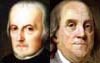
- Pedro Calderón de la Barca (1600-1681) Spanish playwright, who was also sometimes a knight and sometimes a Catholic priest, but regarded as one of Spain's greatest dramatists and one of best in world literature. Most famous of his nearly 20 plays is La Vida Es Sueño (Life Is a Dream); also notable is La Dama Duende (The Phantom Lady).
- Benjamin Franklin (1706-1790) American polymath, Founding Father, first Ambassador to France, and ladies' man. Read his Autobiography; much of Poor Richard's Almanack has entered the common core of culture ("A friend in need is a friend indeed!")
January 18

- Montesquieu (in full, Charles-Louis de Secondat, Baron de La Brède et de Montesquieu; 1689-1755) French man of letters, the principal source of the theory of separation of powers which was adopted into many national constitutions. He wrote Lettres Persanes (Persian Letters); Considérations sur les Causes de la Grandeur des Romains et de Leur Décadence (Considerations on the Causes of the Grandeur and Decadence of the Romans); and De l'Esprit des Lois (The Spirit of the Laws).
- A. A. (Alan Alexander) Milne (1882-1956) English novelist, essayist, poet, playwright, and short-story writer, and, most notably, author of children's literature: he was the "father" of Winnie-the-Pooh (and the father of Christopher Robin Milne).
- Jacob Bronowski (1908-1974) Polish-born British mathematician, historian of science, and poet. His 1973 BBC/PBS series The Ascent of Man literally changed my life with its humanistic view of science; I still watch it nearly 50 years later.
January 19
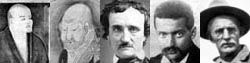
- Dogen Zenji (1200-1253) Japanese Buddhist monk and poet. After five years of study in China, he returned to found the Sōtō school of Zen in Japan, which emphasis meditation over koans (study cases, like the proverbially misstated "What is the sound of one hand clapping?"). His writings include "Bendowa"; "Bussho"; "Genjokoan"; "Uji"; Eihei Koroku (Dogen's Extensive Record); and Eihei Shingi (the first Japanese Zen monastic code).
- Hakuin Ekaku (1686-1768) Japanese Zen monk who led a revival of the other kind of Zen, the Rinzai school, which integrates mediation and koans. He wrote Itsumadegusa (Wild Ivy), as well as commentaries, sermons, and letters.
- Edgar Allan Poe (1809-1849) American poet and short story writer and--it was perhaps-unfairly alleged--dope fiend. Notable short stories (he wrote nearly 70) include "The Cask of Amontillado"; "The Fall of the House of Usher"; "The Masque of the Red Death"; "The Pit and the Pendulum"; The Tell-Tale Heart"; and two stories featuring a detective, which Arthur Conan Doyle (creator of Sherlock Homes) called the "root from which a whole literature has developed": "The Murders in the Rue Morgue" and "The Purloined Letter." Despite the quality of his poems like "Annabel Lee"; "Eldorado"; and "To Helen," all are outstripped in fame by "The Raven."
- Paul Cezanne (1839-1906) French painter considered to be the bridge between Impressionism and Cubism. Cézanne's well over 200 works include the series Mont Sainte-Victoire Seen from Bellevue; Apothéose de Delacroix; Rideau, Cruchon et Compotier; The Card Players (also a series); and The Bathers.
- Eugene Manlove Rhodes (1869-1934) American writer called the "Cowboy Chronicler." He worked both in New York and New Mexico; his novella Paso por Aqui is considered by some to be one of the finest works in the Western genre, and, some would venture, in all of American literature. (It's good!)
January 20
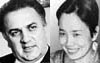
- Federico Fellini (1920-1993) Italian filmmaker recognized as one of the greatest of all time, whose work blends fantasy with earthiness. He made La Strada; Nights of Cabiria; La Dolce Vita; 8-1/2; Satyricon; and Amarcord. He was nominated for twelve Academy Awards, and won four.
- Ariyoshi Sawako (1931-1984) Japanese novelist who wrote The Doctor's Wife, about love-hate between a woman and her formidable mother-in-law; The River Ki, about three generations of modern rural Japanese women; and others. She lived in the U.S. for some time, where she experienced racial discrimination first-hand.
January 21

- Ernest Holmes (1887-1960) American "New Thought" teacher who founded the Religious Science sect of the greater New Thought movement, and wrote The Science of Mind (and other "metaphysical" books) proposing a new relationship between humans and God, focusing on prayer and meditation, spiritual self-healing, self-confidence, and expression of love. His Science of Mind magazine has been published since 1927.
- Clive Donner (1926-2010) British film director and part of the "British New Wave." He directed films such as The Caretaker, Nothing but the Best, What's New Pussycat?, and Here We Go Round the Mulberry Bush, as well as television movies and commercials.
- Jeff Koons (1955 - ) somewhat-controversial American painter and sculptor whose work deals with pop culture. His sculptures (some of which have been auctioned at record-breaking prices) depict everyday objects (like "balloon" animals made of stainless steel), though some critics dismiss his work as crass, cynical self-merchandising.
January 22
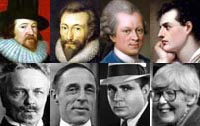
- Francis Bacon (1561-1626) English scientist, philosopher, and statesman, once Lord Chancellor of England. He wrote New Atlantis; Essays, or Counsels, Civil and Moral; and Novum Organum (New Scientific Method). The "father of empiricism," he laid the groundwork for the modern scientific method. He is credited with saying, "Some books are to be tasted; others swallowed; and some few to be chewed and digested."
- John Donne (1572-1631) English poet and cleric best known for the "meditation" that begins "No man is an island" and ends with the lines, "never send to know for whom/the bell tolls; It tolls for thee." Surprisingly, he was also known for erotic and love poems in addition to his religious meditations.
- Gotthold Ephraim Lessing (1729-1781) German writer, philosopher, dramatist, and art critic whose Enlightenment-era plays and other writings substantially influenced the development of German literature. He wrote the essay Laocoön and the play Nathan the Wise, among many other works.
- George Gordon, Lord Byron (1788-1824) English poet and one of the leading figures of the Romantic movement, widely considered among the greatest of the English poets. He wrote lengthy narrative poems like Don Juan and Childe Harold's Pilgrimage, as well as short lyrics like "She Walks in Beauty."
- August Strindberg (1849-1912) daring and prolific Swedish playwright, novelist, poet, essayist, and painter who wrote more than sixty plays and more than thirty other works ; novels The Red Room and Inferno; plays The Father, Miss Julie, To Damascus, A Dream Play, The Ghost Sonata, and The Creditors.
- D. W. Griffith (1875-1948) pioneering American filmmaker and founder of United Artists, who made around 500 films but is mostly remembered for The Birth of a Nation which despite (or because of?) its blatant racism became one of the most financially successful films of all time. It led to riots in major American cities; the NAACP tried to have it film banned. Intolerance, made the next year, was meant as an answer to the critics.
- Robert E. Howard (1906-1936) American pulp-fiction author of the Conan the Barbarian (also known as Conan the Cimmerian) and Solomon Kane series, as well as short stories like "Worms of the Earth" and "Pigeons from Hell." Although his first success came at age 23 and he died by suicide at 30, he left behind hundreds of works.
- Philippa Pearce (1920-006) English author of over 30 children's books, the most famous of which are the fantasy novel Tom's Midnight Garden and the fairy tale The Squirrel Wife.
January 23

- Stendhal (born Marie-Henri Beyle; 1783-1842) French realist novelist. He wrote Le Rouge et le Noir (The Red and the Black, referencing the protagonist's tension between secular and clerical interests) and La Chartreuse de Parme (The Charterhouse of Parma), about the adventures of a young Italian nobleman.
- Edouard Manet (1832-1883) French painter instrumental in the transition from Realism to Impressionism. His 430 oil paintings (in addition to 89 pastels and more than 400 works on paper) included the watershed paintings Luncheon on the Grass (Le déjeuner sur l'herbe) and Olympia.
- Derek Walcott (1930-2017) poet and playwright born in the West Indian island country of Saint Lucia and known for the epic poem Omeros (heavily referencing Homer's Iliad) and play Dream on Monkey Mountain, an examination of racial sensitivities. His numerous awards and prizes included the 1992 Nobel Prize in Literature.
January 24

- William Congreve (1670-1729) English playwright and poet known for satirical dialogue; he influenced the "comedy of manners" of the day. Try The Way of the World; The Old Bachelor; or Love for Love.
- E. T. A. Hoffmann (1776-1822) major Romantic author from Prussia. Perhaps his best-known story is "The Nutcracker and the Mouse King," the basis for a ballet by Tchaikovsky. Three of his stories ("The Sandman," "Councillor Krespel," and "A New Year's Eve Adventure") form the three acts of Jacques Offenbach's opera The Tales of Hoffmann.
- Edith Wharton (1862-1937) American novelist and short story writer who portrayed the lives and morals of the upper classes of New York in the "Gilded Age." Major works include The House of Mirth; Ethan Frome; and The Age of Innocence (won the Pulitzer Prize for Fiction, 1920)
- Theodosius Dobzhansky (1900-1975) Ukrainian-American evolutionary biologist who contributed to the "modern synthesis" of Darwin's theory with Gregor Mendel's ideas on heredity. He wrote Genetics and the Origin of Species and the article "Nothing in Biology Makes Sense except in the Light of Evolution."
- Henri Nouwen (1932-1996) Dutch Catholic priest, theologian, and professor whose works include The Return of the Prodigal Son (based on a meditation on Rembrandt's painting by that name); The Wounded Healer (on a life of service); and In the Name of Jesus (subtitled "Reflections on Christian Leadership").
January 25
- Robert Burns (1759-1796) Scottish poet without whom we'd have nothing to sing on New Year's Eve (he wrote "Auld Lang Syne"). Nothing penetrates the lessons of nature like "To a Mouse" ("the best-laid plans of mice and men..."). His use of the Scots language sometimes requires translation, but can usually be understood well enough by English speakers, and brings a color his work would lack otherwise.
- W. Somerset Maugham (1874-1965) British playwright, novelist and short story writer. Orphaned by age 10 and raised by an emotionally cold uncle, he became a working physician until his first novel (the now-obscure Liza of Lambeth) sold out and he could write full-time. Of Human Bondage is considered his masterpiece. His travels (and spying experience during the First World War) helped inform his works, which include The Moon and Sixpence; Cakes and Ale; and The Razor's Edge.
- Virginia Woolf (1882-1941) English novelist, essayist, critic and icon of modern feminism, and small wonder: Mrs. Dalloway examines the trade-offs made by an upper-class Englishwoman; To the Lighthouse re-examines family relations; the protagonist of Orlando changes sex from man to woman; and the essay A Room of One's Own explores the effect of social injustices on women's lack of free expression.
January 26
- Philip José Farmer (1918-2009) American author of science fiction, best known for sequences of novels such as the World of Tiers and Riverworld series. He often mixed real and classic fictional characters and worlds, and real and fake authors, and pioneered the use of sexual and religious themes in his work.
January 27

- Wolfgang Amadeus Mozart (1756-1791) Austrian composer and archetype of the "wunderkind": by age five he was already playing keyboard and violin, and at that age composed and performed his own pieces in front of royalty. He burned bright and died at age 35 of an unknown illness; modern researchers have suggested more than a hundred causes of death. In his brief life he composed chamber music, concertos, operas (including The Magic Flute and The Marriage of Figaro), and 41 symphonies.
- Lewis Carroll (1832-1898) English writer and mathematician. He was a fun and funny guy--a dab hand at puzzles and riddles--who did much of his work to please the children of his friends, one of whom was named Alice. He wrote the novels Alice's Adventures in Wonderland and Through the Looking-Glass; and the poems The Hunting of the Snark and "Jabberwocky."
January 28

- Prince Toneri (676-735) Japanese editor (with O no Yasumaro, another nobleman) of Nihon Shoki (The Chronicles of Japan), also called the Nihongi. It's Japan's second-oldest chronicle (after the Kojiki), starting with the creation myths and blending into history up to the 8th century when it was compiled. It contains the most complete extant historical record of ancient Japan. Toneri himself was the son of one emperor and father of another, under whom he was posthumously named an emperor.
- Colette (full name Sidonie-Gabrielle Colette, 1873-1954) French novelist who wrote Gigi, about a sixteen-year-old trained to catch a wealthy lover but who married him instead. With her first husband Henry Gauthier-Villars (known as "Willy"), she co-wrote the four novels known as the "Claudine stories," purporting to be the diary of a fifteen-year-old girl growing to adulthood. How much was written by Willy (under whose name the books first appeared) and how much by Collette (a model for the protagonist) has never been determined.
- Harvey Fergusson (1890-1971) writer of the American Southwest. The Albuquerque-born son of a U.S. senator and the brother of writer Erna, he was a reporter in the east and the south who returned to his roots when he began writing novels set in the southwest, including the "Followers of the Sun" trilogy: The Blood of the Conquerors; In Those Days; and Wolf Song (this last, about a mountain man based loosely on Kit Carson, is considered his best). He wrote other novels, some set in the southwest as well, and also worked as a screenwriter and wrote nonfiction books including an autobiography.
January 29

- Emanuel Swedenborg (1688-1688) Swedish scientist-turned mystic whose "pluralistic" Christianity would have gotten him burned at the stake a century or two earlier; as it was Branches of the "New (Swedenborgian) Church" founded after his death number claim nearly 10,000 members today. His main work was True Christian Religion (considered by some as an authentic revelation); Heaven and Hell was also popular.
- Anton Chekhov (1860-1904) Russian playwright and short story writer. His "four classic" plays were Uncle Vanya; The Cherry Orchard; Three Sisters; and The Seagull. He wrote over 500 short stories, including "The Black Monk," "The House with the Mezzanine," "The Peasants," "Gooseberries," and "The Lady with the Toy Dog."
- Romain Rolland (1866-1944) French playwright, novelist, essayist, art historian and mystic. His thoughts on mysticism influenced those of Freud (who cited him anonymously in Civilization and its Discontents); Hermann Hesse dedicated Siddhartha to him. His most famous novel is a 10-volume sequence, Jean-Christophe; along with other novels he wrote biographical essays including those of Ramakrishna and Vivekananda. He won the Nobel Prize in Literature in 1915.
- Ernst Lubitsch (1892-1947) German-American filmmaker whose gently puncturing approach in films came to be called "the Lubitsch touch." He made 72 films (44 features and 28 shorts) including Ninotchka; Trouble in Paradise; The Shop Around the Corner; Heaven Can Wait; and To Be or Not to Be. In 1946, he received an Honorary Academy Award.
- Edward Abbey (1927-1989) American novelist and essayist who became an icon of the environmental movement. Desert Solitaire, based on his experience as a ranger at Arches National Monument (now a national park), is a model of "nature autobiography"; his novel The Monkey Wrench Gang depicts the use of grassroots sabotage to protest environmentally damaging activities in the Southwest.
January 30

- Walter Savage Landor (1775-1864) English writer, poet, and activist. He was known for the five volumes of Imaginary Conversations, mainly between historical figures, including classical Greeks and Romans; and the brief poem "Rose Aylmer," about a young love he lost through her death at age 20.
- Barbara W. Tuchman (1912-1989) American historian who won two Pulitzers for General Non-Fiction, the first in 1962 for The Guns of August, about the lead-up to and first month of World War I, and the second in 1971 for the biography Stilwell and the American Experience in China. Her father briefly owned the progressive magazine The Nation.
- Lloyd Alexander (1924-2007) American author of more than 40 books, mainly fantasy novels for children and young adults, most famously a series of five fantasy novels rooted in Welsh mythology called The Chronicles of Prydain and featuring an "Assistant Pig-Keeper" who becomes the "High King"; the second of these was animated by Disney. Also of note is the darker and more adult Westmark trilogy, set in a time similar to the history of the French Revolution.
- Richard Brautigan (1935-1984) American experimental writer associated with the San Francisco "scene" of the 1960s. His works are often made up of abstract series of anecdotes (like Trout Fishing in America) or surreal Dali-esque scenes (like In Watermelon Sugar) He was noted for his use of black comedy, parody, and satire.
January 31

- Franz Schubert (1797-1828) Austrian composer from Vienna who before he died (possibly of syphilis) at age 31 wrote over 1500 items in many genres, including chamber music (including the Trout Quintet); lieder, (German for "songs"); and symphonies (including the Unfinished).
- Zane Grey (1872-1939) American adventure writer who began writing to alleviate the tedium of practicing as a dentist. He wrote over 100 books, many of them in the Western genre featuring an idealized American frontier. The best-known of these is Riders of the Purple Sage. As of 1996, his works had been the basis of 112 films, plus episodes of three television different series.
- John O'Hara (1905-1970) American novelist, short story writer, playwright, and essayist. He was noted especially for his short stories, which helped mold the style of stories in The New Yorker magazine, but novels such as Appointment in Samarra, BUtterfield 8, and Pal Joey were also immensely popular.
- Thomas Merton (1915-1968) American Trappist monk, Catholic writer (of over 50 books) and mystic who was ahead of his time in exploring Eastern spirituality, dialoguing with the Dalai Lama, Thich Nhat Hanh, and D.T. Suzuki. His bestselling autobiography The Seven Storey Mountain was followed by the book of reflections titled Seeds of Contemplation.
- Norman Mailer (1923-2007) wildly successful American novelist, essayist, playwright, and journalist who had 11 best-selling books, at least one in each of seven decades after World War II, beating out any other post-war American writer. He wrote The Naked and the Dead; the "nonfiction novel" titled The Armies of the Night (Pulitzer Prize for General Non-Fiction, 1969); and The Executioner's Song (Pulitzer Prize for Fiction, 1980). With Truman Capote and others he helped pioneer the "New Journalism" that uses the style of literary fiction in journalism.
- Oe Kenzaburo (1935 - ) Japanese novelist, short story writer, and essayist. A major literary figure in his home country, he was influenced in his early days by French and American literature, and has used his insights to oppose nuclear weapons and power, the power wielded by the Japanese Imperial household, and other issues. He was awarded the Nobel Prize in Literature in 1994. The semi-autobiographical novel A Personal Matter tells the story of a young father grappling with the severe mental disability of his newborn son; The Silent Cry tells the story of two brothers in the early 1960s who, after decades of separation, deal with their own crises on a visit to their ancestral village in the countryside.
Wednesday, December 1, 2021
Great Minds Born in December
Here are all the "Great Minds" Posts made in December, 2021
December 1

- Black Elk (1863-1950) Native American elder and writer; Black Elk Speaks (with John Neihardt)
- Woody Allen (1935 - ) American filmmaker; Annie Hall; Interiors; Manhattan; The Purple Rose of Cairo; Hannah and Her Sisters; Bullets over Broadway; Mighty Aphrodite; Stardust Memories; Match Point; numerous Academy Awards
December 2

- Björnstjerne Björnson (1832-1910) Norwegian writer and Nobel winner (1903) known for his "peasant tales" such as A Happy Boy; with Ibsen, Lie, and Kielland, one of Norway's "Four Greats."
- Georges Seurat (1859-1891) French painter; Sunday Afternoon on the Island of La Grande Jatte; Bathers at Asnières; Jeune femme se poudrant
December 3
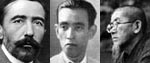
- Joseph Conrad (1857-1924) Polish-British novelist; The Nigger of the "Narcissus"; Heart of Darkness; Lord Jim; Typhoon; Nostromo; The Secret Agent; Under Western Eyes
- Nagai Kafu (1879-1959) Japanese novelist, short-story writer, playwright, essayist, and diarist; Ude Kurabe (Geisha in Rivalry); Amerika Monogatari (American Stories); Sumidagawa (Sumida River); Bokuto Kidan (A Strange Tale from East of the River); films The Strange Story of Oyuki; Bungō: Sasayaka na yokubō; Yume no onna (Yearning)
- Taneda Santoka (1882-1940) Japanese poet; Somokuto (Grass and Tree Cairn); For All My Walking
December 4

- Thomas Carlyle (1795-1881) Scottish philosopher; On Heroes, Hero-Worship, and The Heroic in History; The French Revolution: A History; Sartor Resartus
- Samuel Butler (1835-1902) English author; Erewhon; The Way of All Flesh
- Rainer Maria Rilke (1875-1926) Bohemian-Austrian poet and novelist; poetry collections Duineser Elegien (Duino Elegies) and Die Sonette an Orpheus (Sonnets to Orpheus); novel Die Aufzeichnungen des Malte Laurids Brigge (The Notebooks of Malte Laurids Brigge); and a collection of Letters to a Young Poet
December 5

- Christina Rossetti (1830-1894) English poet; Goblin Market; Remember
- Fritz Lang (1890-1976) Austrian-German filmmaker; Metropolis; M; The Big Heat; Fury; You Only Live Once; The Woman in the Window; While the City Sleeps
- Walt Disney (1901-1966) American filmmaker and entrepreneur responsible for dozens of animated and live-action films (which earned a record 22 Academy Awards, plus four honoraries) as well as theme parks and other enterprises. His films include Snow White and the Seven Dwarfs; Fantasia; Pinocchio; Dumbo; Bambi; Cinderella; and Mary Poppins.
- Werner Heisenberg (1901-1976) German physicist; The Physical Principles of the Quantum Theory; Nobel Prize in Physics (1932)
- Otto Preminger (1905-1986) Austrian American filmmaker; Laura; Fallen Angel; The Man with the Golden Arm; Anatomy of a Murder; Exodus; Advise and Consent; The Cardinal
December 6

- Baldassare Castiglione (1478-1529) Italian courtier and author; Il Cortegiano (The Courtier)
December 7

- Johan Huizinga (1872-1945) Dutch historian; The Autumn of the Middle Ages (a.k.a. The Waning of the Middle Ages); Erasmus; Homo Ludens
- Willa Cather (1873-1947) American author; O Pioneers!; Death Comes for the Archbishop; The Song of the Lark; My Ántonia; Pulitzer Prize in Literature (1923)
December 8
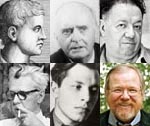
- Horace (65-8 BCE) Roman lyric poet who wrote Odes
- Padraic Colum (1881-1972) Irish poet, novelist, dramatist, playwright, children's author, and folklorist; The Saxon Shillin'; The King of Ireland's Son; The Children's Homer; Children of Odin: Nordic Gods and Heroes; The Golden Fleece and the Heroes Who Lived Before Achilles
- Diego Rivera (1886-1957) Mexican painter and muralist; murals Man, Controller of the Universe; The History of Mexico; paintings The Fecund Earth; The Flower Seller
- James Thurber (1894-1961) American cartoonist, author, journalist, and playwright; short stories "The Secret Life of Walter Mitty"; "The Catbird Seat"; "The Unicorn in the Garden"; play The Male Animal; autobiography My Life and Hard Times; children's books The White Deer; The 13 Clocks; The Wonderful O
- Delmore Schwartz (1913-1966) American poet and short story writer; "In Dreams Begin Responsibilities"; Summer Knowledge: New and Selected Poems
- Bill Bryson (1951 - ) Anglo-American author; The Lost Continent: Travels in Small-Town America; Notes from a Small Island; A Walk in the Woods; A Short History of Nearly Everything
December 9

- John Milton (1608-1674) English poet and man of letters; Paradise Lost; Tractate on Education; Areopagitica; and minor poems in English (including "Lycidas" and "On the Morning of Christ's Nativity"; "Sonnets")
- Richard Lovelace (1617-1657) English poet; "To Althea, from Prison," "To Lucasta, Going to the Warres"
- Joel Chandler Harris (1848-1908) American journalist and folklorist; the Uncle Remus series
December 10
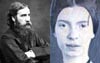
- George MacDonald (1824-1905) Scottish writer and cleric who inspired a myriad of writers, from Lewis Carroll to W. H. Auden, Mark Twain to J. R. R. Tolkien, Neil Gaiman to Madeleine L'Engle.. Known for Lilith; Phantastes; David Elginbrod; The Princess and the Goblin; At the Back of the North Wind
- Emily Dickinson (1830-1886) American poet; short pieces numbering close to 1800; "There is no frigate like a book"; "Because I could not stop for death"; "I taste a liquor never brewed"; "I'm Nobody! Who are you?"; "I like to see it lap the Miles"; etc.
December 11

- Hector Berlioz (1803-1869) French composer; Damnation of Faust; Symphonie Fantastique; Requiem
- Horace Bell (1830-1918) American author and lawman; Reminiscences of a Ranger
- Naguib Mahfouz (1911-2006) Egyptian writer; 34 novels (including Midaq Alley and the "Cairo Trilogy"), over 350 short stories, and more; Nobel Prize in Literature (1988)
- Aleksandr Solzhenitsyn (1918-2008) Russian novelist, historian, and short story writer; The First Circle; One Day in the Life of Ivan Denisovich; Cancer Ward; August 1914; The Gulag Archipelago; Nobel Prize in Literature (1970)
December 12

- Gustave Flaubert (1821-1880) French novelist; novel Madame Bovary; stories "A Simple Heart," "Saint Julian the Hospitalier," and "Hérodias"
- Edvard Munch (1863-1944) Norwegian painter; The Scream; Madonna; The Sick Child
December 13

- Heinrich Heine (1797-1856) German poet; Buch der Lieder (Book of Songs), many set to music by the likes of Robert Schumann and Franz Schubert; also, Reisebilder (Travel Pictures); Deutschland: Ein Wintermärchen (Germany: A Winter's Tale); Atta Troll: Ein Sommernachtstraum (Atta Troll: A Midsummer Night's Dream); Romanzero (a collection)
- Marc Connelly (1890-1980) American playwright; best known for his play The Green Pastures, which tells Bible stories as visualized by black characters, and won the Pulitzer Prize for Drama in 1930
- Ross Macdonald (1915-1983) American-Canadian author of crime stories, including the Lew Archer series
December 14

- Shirley Jackson (1916-1965) American novelist and short story writer; The Haunting of Hill House; "Charles"; "The Lottery"
December 15

- Maurice Wilkins (1916-2004) New Zealand-English biophysicist and co-laureate of the 1962 Nobel Prize for Physiology or Medicine along with the better-known James Watson and Francis Crick for their work in unraveling the secrets of DNA.
- Freeman Dyson (1923-2020) groundbreaking English-American theoretical physicist and mathematician who originated several concepts that bear his name, none of which I understand
- Edna O'Brien (1930 - ) prolific Irish novelist, playwright, poet, and short story writer best known for The Country Girls, a trilogy which broke the taboo on discussing sexual matters in Ireland after WWII. The novels were censored and faced significant public disdain in Ireland.
December 16

- Jane Austen (1775-1817) revered English novelist; Sense and Sensibility; Pride and Prejudice; Mansfield Park; Emma; Northanger Abbey; Persuasion
- George Santayana (1863-1952) Spanish-American philosopher, essayist, poet, and novelist who said, "Those who cannot remember the past are condemned to repeat it." His many works include The Sense of Beauty; The Life of Reason; Scepticism and Animal Faith; The Last Puritan
- Margaret Mead (1901-1978) American cultural anthropologist who became a media darling during the 1960s and 1970s. Coming of Age in Samoa put her on the map; Sex and Temperament in Three Primitive Societies extended her influence.
- Noel Coward (1899-1973) witty, flamboyant English playwright of Hay Fever; Private Lives; Design for Living; Present Laughter; Blithe Spirit; Academy Honorary Award (1943)
- Arthur C. Clarke (1917-2008) visionary British author of science fiction; 2001: A Space Odyssey; Profiles of the Future; Rendezvous with Rama; The Fountains of Paradise
- Philip K. Dick (1928-1982) American author of science fiction; Do Androids Dream of Electric Sheep? (better known as Blade Runner); The Man in the High Castle; A Scanner Darkly; Flow My Tears, the Policeman Said; the VALIS trilogy; We Can Remember It For You Wholesale
December 17

- Ludwig van Beethoven (1770-1827) prototypical German composer best known for his Fifth and Ninth Symphonies (the other seven are pretty good, too); Concertos (Emperor); sonatas (Moonlight, Pathetique); opera Fidelio; "Fur Elise"
- John Greenleaf Whittier (1807-1892) American poet, known for Barbara Frietchie and Snow-Bound; anti-slavery writings
- Ford Madox Ford (1873-1939) English novelist, poet, critic and editor known for his novels The Good Soldier; Parade's End (tetralogy); The Fifth Queen (trilogy)
- Erskine Caldwell (1903-1987) trashy-seeming American novelist and social critic; Tobacco Road (ironically, he died of complications from smoking); God's Little Acre
December 18

- Charles Wesley (1707-1788) English leader of the Methodist movement (brother of John) who wrote somewhere between 6,500 and 10,000 hymns, including "Hark! The Herald Angels Sing," "Christ the Lord Is Risen Today," "Christ, Whose Glory Fills the Skies," "Come, Thou Long Expected Jesus," "Love Divine, All Loves Excelling"
- Saki (1870-1916), pen name for H. H. Munro, light-hearted British short story writer, playwright, and novelist; "The Storyteller"; "The Open Window"; "The East Wing"; The Westminster Alice; The Chronicles of Clovis
- Christopher Fry (1907-2005) English poet and playwright; best-known for his play about the Middle Ages, The Lady's Not for Burning, in which a soldier wants to die and a supposed witch wants to live.
- Steven Spielberg (1946 - ) ubiquitous American filmmaker; Jaws; Close Encounters of the Third Kind; Raiders of the Lost Ark; E.T. the Extra-Terrestrial; The Color Purple; Empire of the Sun; Schindler's List (Oscar for Best Picture and Best Director); Amistad; Saving Private Ryan (Oscar for Best Director; Munich; Lincoln; Jurassic Park; 14 more Academy Award nominations to date
December 19
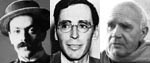
- Italo Svevo (1861-1928) Italian novelist, playwright, and short story writer, a close friend of James Joyce. He wrote The Confession of Zeno and As a Man Grows Older.
- Oliver La Farge (1901-1963) American novelist and anthropologist who wrote about Native American culture; Laughing Boy, about the assimilation of the Navajos, won the Pulitzer Prize for Fiction (1930)
- Jean Genet (1910-1986) French writer--once a vagabond and petty criminal--who became novelist, playwright, poet, essayist, and political activist; novels Our Lady of the Flowers, The Thief's Journal; play The Balcony
December 20

- George Roy Hill (1922-2002) American film director of such films as Butch Cassidy and the Sundance Kid (nominated: Best Director Oscar) and The Sting (won: Best Director Oscar), both with Paul Newman and Robert Redford; as well as Slaughterhouse-Five, The World According to Garp, and others.
- Sandra Cisneros (1954 - ) American author and poet best known for her first novel, a coming-of-age story called The House on Mango Street, and her short story collection Woman Hollering Creek and Other Stories.
- Alain de Botton (1969 - ) Swiss-born British philosopher and author who explores philosophy's relevance to everyday life in books like Essays in Love, How Proust Can Change Your Life, etc. Founder of The School of Life.
December 21
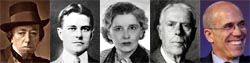
- Benjamin Disraeli (1804-1881) English lawyer, Prime Minister of the United Kingdom, who wrote over 15 novels--some of them while in office--as well as poetry, a drama, and non-fiction books.
- Albert Payson Terhune (1872-1942) American author, dog breeder, and journalist who wrote around 70 books, many of them about dogs, specifically his collies, including Lad: A Dog.
- Rebecca West, pen name of Cicily Isabel Fairfield (1892-1983) English journalist and novelist called by Time Magazine in 1947, "indisputably the world's number one woman writer."
- Anthony Powell (1905-2000) English novelist best known for his 12-volume A Dance to the Music of Time (1951-1975), an examination of mid-20th century English politics, culture, and military, and one of the longest novels ever written in English.
- Jeffrey Katzenberg (1950 - ) American movie exec, chairman of Walt Disney Studios for a decade (during which Roger Rabbit, The Little Mermaid, Beauty and the Beast, Aladdin, and The Lion King were produced), and co-founder and CEO of DreamWorks Animation (overseeing Shrek, Madagascar, Kung Fu Panda).
December 22

- Jean Racine (1639-1699) French writer of elegant, hard-edged plays; Phèdre; Andromaque; Athalie
- Jean-Henri Fabre (1823-1915) French scientist who wrote lively works on insects, especially for younger readers; try Fabre's Book of Insects.
- Giacomo Puccini (1858-1924) Italian composer of operas; La Boheme; Manon Lescaut; Tosca; Madama Butterfly; Turandot
- Edwin Arlington Robinson (1869-1935) American poet; three Pulitzer Prizes for Poetry in one decade: Collected Poems (1922); The Man Who Died Twice (1925); Tristram (1928). He was also nominated four times for the Nobel Prize in Literature.
December 23

- Charles Augustin Sainte-Beuve (1804-1869) French literary critic widely translated into English; "What Is a Classic?" (the answer may surprise you!); "Montaigne."
December 24

- Matthew Arnold (1822-1888) English poet and critic, as well as school inspector; "Dover Beach"; "The Scholar-Gipsy"; "Thyrsis"; Culture and Anarchy; Literature and Dogma
- Michael Curtiz (1886-1962) Hungarian-American filmmaker of some of the best:; Casablanca (Best Director Oscar); Angels with Dirty Faces; Yankee Doodle Dandy; Mildred Pierce; White Christmas
- Fritz Leiber (1910-1992) amusing American fantasy and science fiction writer, most famous for stories starring his characters Fafhrd and the Gray Mouser
December 25

- Isaac Newton (1642-1727) English natural philosopher (scientist), and something of a mystic to boot; Philosophiae Naturalis Principia Mathematica (Mathematical Principles of Natural Philosophy)
- William Collins (1721-1759) English poet second in influence in his time only to Thomas Gray (see December 26); Persian Eclogues
- Cab Calloway (1907-1994) larger-than-life American performer and bandleader; "Minnie the Moocher"; "Saint James Infirmary"; "Kicking the Gong Around"; "Between the Devil and the Deep Blue Sea"; Grammy Lifetime Achievement Award (2008)
December 26

- Thomas Gray (1716-1771) English poet; "Elegy Written in a Country Churchyard"; "Ode on the Death of a Favourite Cat, Drowned in a Tub of Gold Fishes"
- Jean Toomer (1894-1967) American poet and novelist who resisted being classified as a "Negro writer," best known for the novel Cane. He was later a follower spiritual teacher G.I. Gurdjieff.
- Henry Miller (1891-1980) American writer of notoriously naughty books; Tropic of Cancer; Black Spring; Tropic of Capricorn; The Colossus of Maroussi; The Rosy Crucifixion (Sexus, Plexus, and Nexus)
December 27

- Johannes Kepler (1571-1630) German astronomer and mathematician who codified the laws of planetary motion; writings Astronomia Nova (New Astronomy); Harmonices Mundi (The Harmony of the World); Epitome Astronomiae Copernicanae (Epitome of Copernican Astronomy)
- Louis Pasteur (1822-1895) French chemist and microbiologist, a pioneer of vaccination development and the inventor of pasteurization. He wrote Germ Theory and Its Applications to Medicine.
- Juan Felipe Herrera (1948 - ) bilingual American Chicano poet, Poet Laureate of the USA (2015-2017); works include Calling the Doves/Canto a Las Palomas; CrashBoomLove: A Novel in Verse; Grandma & Me at the Flea/Los Meros Meros Remateros; and Super Cilantro Girl/La Superniña del Cilantro.
December 28

- Arthur Eddington (1882-1944) English astronomer, physicist, mathematician, philosopher and (most importantly for many of us) popularizer of science; The Mathematical Theory of Relativity; The Nature of the Physical World; New Pathways in Science
December 29

- Charles Macintosh (1766-1843) Scottish chemist and the inventor of waterproof fabric; the Mackintosh [sic; the "k" was added] raincoat is named after him, leading to great confusion for this American boy when the Beatles sang, "The man in the mac said 'You've got to go back'" in "The Ballad of John and Yoko."
- Charles Goodyear (1800-1860) American chemist and manufacturing engineer who developed vulcanized rubber, leading to the formation of the company that sponsored a fleet of airships ("blimps") used for advertising and, later, aerial coverage of sporting events (while advertising).
- Pablo Casals (1876-1973) Catalan cellist and conductor, one of the greatest cellists of all time, who gave a solo recital in Barcelona at the age of fourteen. Best remembered for recordings of the Bach Cello Suites made from 1936 to 1939; Presidential Medal of Freedom, 1963, among many honors.
- Robert Ruark (1915-1965) American author, syndicated columnist, and big game hunter. Though called "ruthless" and "a tough and cruel rogue," his fame today rests on two collections of columns from Field & Stream, titled The Old Man and the Boy and The Old Man's Boy Grows Older, fictionalized conversations embodying the wisdom his grandfathers taught him.
December 30

- Theodor Fontane (1819-1898) German novelist and poet who, after a career in journalism, published his first novel at age 58; this is what he is best remembered for today. He was often critical of the German society of his day, and was known for his strongly drawn female characters, his tender irony, and the quality of the dialogues in his work. Best-remembered novels include Trials and Tribulations, Frau Jenny Treibel, and Effi Briest.
- Rudyard Kipling (1865-1936) English journalist, short-story writer, poet, and novelist, whose "children's books" say more than many "adult books" these days; The Jungle Book; Just So Stories; Kim; Captains Courageous; poems "If—"; "Gunga Din"; "The White Man's Burden"; Nobel Prize in Literature (1907)
- Paul Bowles (1910-1999) American expat (52 years in Tangiers) composer, translator, and author of novels like The Sheltering Sky and short story collections like The Delicate Prey and Other Stories.
December 31

- Jean de Crèvecoeur (1735-1813) French-American author; At age 20 he immigrated to America, became a citizen, and took the name John Hector St. John; he later married an American woman. He returned to France (after many trials) around 1780. In London he wrote Letters from an American Farmer, on which his fame rests today. He would move between the US and France for the rest of his life.
- Henri Matisse (1869-1954) French artist, one of the Fauves (wild beasts) known for their use of intense color. He is commonly regarded, with Picasso, as one of the artists responsible for significant developments in 20th-century arts. Representative works include Woman with a Hat; The Joy of Life; Nu bleu; and La Danse.
Subscribe to:
Comments (Atom)